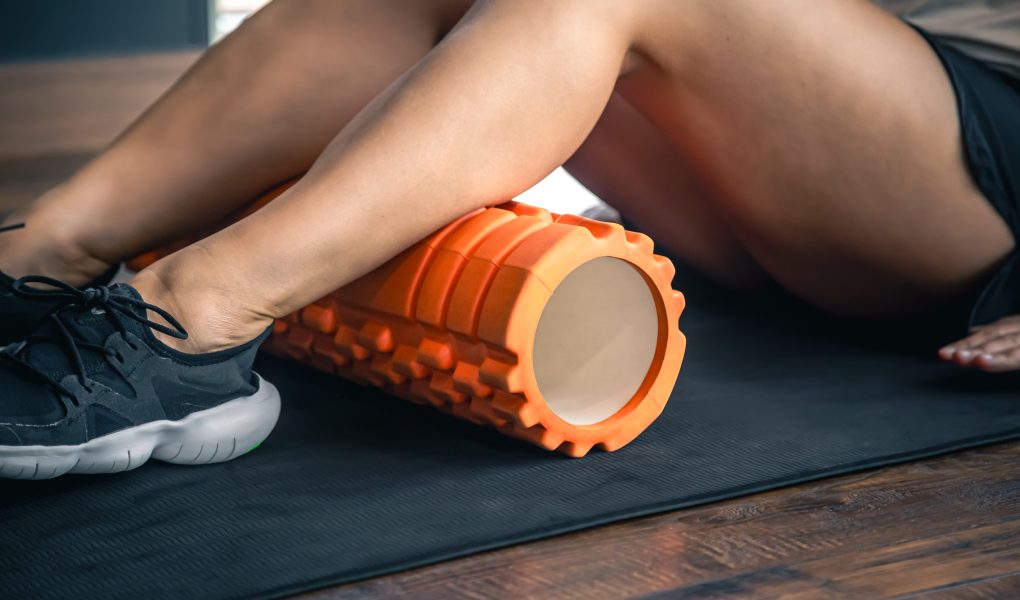
Tension in your body doesn’t just feel uncomfortable—it can affect posture, energy, and even hormones. Self-myofascial release with a foam roller or massage ball is one of the simplest ways to relieve stress from muscles and fascia, improve circulation, and support recovery. And the best part? You don’t need a gym—you can do it at home with just one tool.
Here are the two essentials every woman should know about:
Foam Roller – For Bigger Muscle Groups
A foam roller is the classic tool for releasing tension in large areas like thighs, calves, or the back.
- Available in different densities: softer rollers for beginners, firmer rollers for deeper release.
- Rolling stimulates fluid flow in fascia, which improves recovery and reduces stiffness.
- Regular use helps maintain better posture and reduces soreness after workouts or long hours of sitting.(1)
Find foam rollers on Amazon
Lacrosse Ball / Trigger Point Ball – For Small, Tight Spots
A lacrosse ball (or trigger point ball) is compact, affordable, and perfect for areas a roller can’t reach:
- Great for shoulder blades, feet, and hips—places that often carry hidden tension.
- Works by applying focused pressure to trigger points, helping the muscle fibers relax.
- Small enough to carry in a bag, so you can use it at home, at work, or even while traveling. (2)
Check massage balls
Conclusion
Both tools work best together: a foam roller for broad release and a massage ball for pinpoint accuracy. By including self-massage in your routine, you’ll not only feel more relaxed, but also improve circulation, posture, and overall body function.
- Wiewelhove, T., Döweling, A., Schneider, C., Hottenrott, L., Meyer, T., Kellmann, M., Pfeiffer, M., & Ferrauti, A. (2019). A meta-analysis of the effects of foam rolling on performance and recovery. Frontiers in Physiology, 10, 376.
- Kim, Y., Hong, Y., & Park, H.-S. (2019). A soft massage tool is advantageous for compressing deep soft tissue with low muscle tension: Therapeutic evidence for self-myofascial release. Complementary Therapies in Medicine, 43, 312–318.