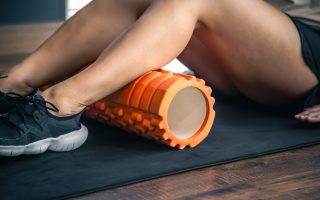
Fascia—the web of connective tissue that wraps around muscles, bones, and organs—thrives on movement. But not all movement is created equal. The way you walk, breathe, and train every day determines whether your fascia stays elastic, hydrated, and pain-free—or stiff and overworked. Here are five habits to keep your fascia healthy and your body moving with ease.
Natural Daily Movement
Walking isn’t just cardio—it’s fascia hydration. Every step, especially when your trunk and arms rotate naturally, pumps fluids through the fascial network. This keeps tissues supple, nourished, and resilient. Without daily movement, fascia becomes dry and sticky, leading to stiffness. (1)
Myofascial Elasticity
Fascia loves elastic recoil—like a spring storing and releasing energy. Dynamic, spiral-like movements (jumping, skipping, flowing stretches) load and release fascia in a healthy way. In contrast, isolated heavy lifting or rigid training puts too much linear stress on the tissue, reducing its natural elasticity. (2)
Balance Between Stress & Recovery
Too much repetitive training—like only running or only lifting weights—creates one-sided tension in fascia. What it really needs is variability: spiral, rotational, and playful patterns that mimic natural movement. Recovery (stretching, rolling, breathing) is just as important as effort. (3)
Breathing & Posture
Healthy fascia begins with alignment. If your posture collapses, fascia is in constant tension, compensating to hold you up. Open, upright posture allows deeper breathing, which oxygenates tissues and reduces chronic stress signals in the body. (4)
Playful & Enjoyable
Movement shouldn’t feel like punishment. Fascia responds best when your body feels safe and joyful. Dancing, hiking, or even playful stretching communicates to your nervous system: “This is good for me.” Joyful movement reduces stress hormones, boosts regeneration, and makes fascia more adaptable. (5)
Conclusion
Your fascia is your body’s hidden network of support. By walking with rotation, embracing elastic movement, balancing training with recovery, aligning posture, and keeping play in your routine, you help your fascia stay fluid, springy, and pain-free.
- Gefen, A. (2003). The in vivo elastic properties of the plantar fascia during the contact phase of walking. Foot & Ankle International, 24(3), 238–244.
- Colonna, S., & Casacci, F. (2024). Myofascial system and physical exercise: A narrative review on stretching (part I). Cureus, 16(12), e75077.
- Slater, A. M., Barclay, S. J., Granfar, R. M. S., & Pratt, R. L. (2024). Fascia as a regulatory system in health and disease. Frontiers in Neurology, 15.
- Tassani, S., Chaves, P., Beardsley, M., Vujovic, M., Ramírez, J., Mendoza, J., Portero-Tresserra, M., González-Ballester, M. A., & Hernández-Leo, D. (2024b). Breathing, postural stability, and psychological health: A study to explore triangular links. Frontiers in Bioengineering and Biotechnology, 12, 1347939.
- Langevin, H. M. (2021). Fascia mobility, proprioception, and myofascial pain. Life, 11(7).