Bad posture isn’t just about how you look—it directly affects your breathing, energy, and long-term health. Small misalignments put stress on your spine, muscles, and even hormones, leading to fatigue and pain. Here are five of the most common posture mistakes women make, and why they matter.
Kyphosis (Rounded Back)
When the upper back and shoulders roll forward, the chest collapses. This limits lung capacity, making your breathing shallow. Shallow breathing keeps stress hormones higher, leaving you more tired and less resilient. (1)
Anterior Pelvic Tilt
When the pelvis tips forward, the lower back arches too much. This posture often develops from too much sitting and tight hip flexors. The result: lower back pain, tightness, and weak core support.(2) (4)
Posterior Pelvic Tilt
The opposite of the anterior tilt—when the pelvis tucks under. This weakens the glutes and overloads the lower back muscles. Over time, it creates stiffness and poor shock absorption when walking or standing. (2) (4)
Anterior Pelvic Shift
This happens when the whole pelvis pushes forward, and the upper body leans back. It may feel like “relaxed standing,” but it actually overloads the spine and puts stress on the hips. Long-term, it drains energy because your body is constantly compensating.(2) (4)
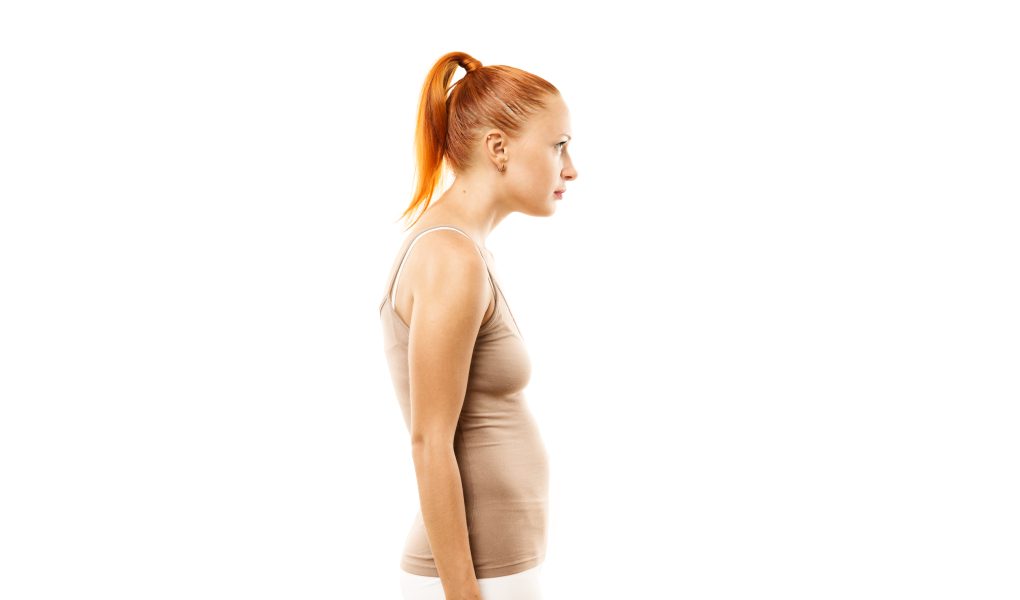
Forward Head Posture
Often caused by phones and computers, this posture pushes the head forward in front of the body. It strains the neck, causes headaches, eye fatigue, and even impacts concentration. For every inch your head moves forward, the load on your neck muscles doubles. (3)
Conclusion
Posture mistakes may look small, but their effects on your breathing, core, and energy are huge. By becoming aware of these five patterns, you can start correcting them through simple daily habits and fascia-friendly exercises. Better posture means less pain, more energy, and greater confidence.
- Lorbergs, A. L., O’Connor, G. T., Zhou, Y., Travison, T. G., Kiel, D. P., Cupples, L. A., Rosen, H., & Samelson, E. J. (2017). Severity of kyphosis and decline in lung function: The Framingham Study. The Journals of Gerontology. Series A, Biological Sciences and Medical Sciences, 72(5), 689–694.
- Aguilar, N. (2014). The power of posture.
- Mylonas, K., Angelopoulos, P., Billis, E., & Fousekis, K. (2021, September 18). The effects of therapeutic exercise in improving forward head posture and functionality in patients with… Unknown.
- Kim, W.-D., & Shin, D. (2023). Effects of pelvic-tilt imbalance on disability, muscle performance, and range of motion in office workers with non-specific low-back pain. Healthcare (Basel, Switzerland), 11(6), 893.